Principles of Plant Genetics and Breeding
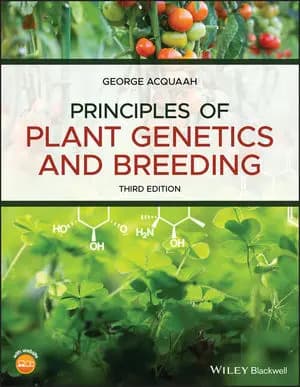
Synopsis
A comprehensive and authoritative reference on plant genetics and breeding that balances academic rigor with practical application, serving both students and professionals in agricultural sciences.
Analysis
Rating:
Summary
This book is an essential academic resource in plant science and breeding, best suited for advanced undergraduates, graduate students, and professionals. Its strong theoretical foundation and relevance to real-world agricultural problems make it a valuable contender for an educational science prize, especially in the life sciences.
Readability
The writing is academically solid but dense in places, with heavy use of technical terminology that may challenge readers without a solid biology background. That said, the text is logically structured with clear chapter divisions and subheadings (e.g., Chapter 6 on Genetic Basis of Inheritance), and definitions are often provided inline. Engagement varies—some chapters are more textbook-like in tone and formatting, making them less accessible for casual readers.
Accessibility
The book includes a variety of figures, tables, and diagrams (e.g., chromosome maps and Punnett squares on pages 98–102) that enhance understanding of genetic principles. However, it lacks hands-on learning components like lab activities or case studies. The visual layout is conventional but clean, and some chapters are supported by photos of crops and field techniques (e.g., hybrid seed production on page 276). Interdisciplinary links (e.g., molecular biology, biotechnology) are present but not emphasized for cross-field learners.
Impact
The educational depth is outstanding, covering everything from classical Mendelian genetics to marker-assisted selection and genetic engineering. It includes real-world applications such as breeding for disease resistance and climate resilience (Chapter 18 on Biotic Stress Resistance is especially impactful). It motivates scientific curiosity through scope and depth, and while more practice-oriented tools would be welcome, it remains a go-to resource for agricultural science programs.